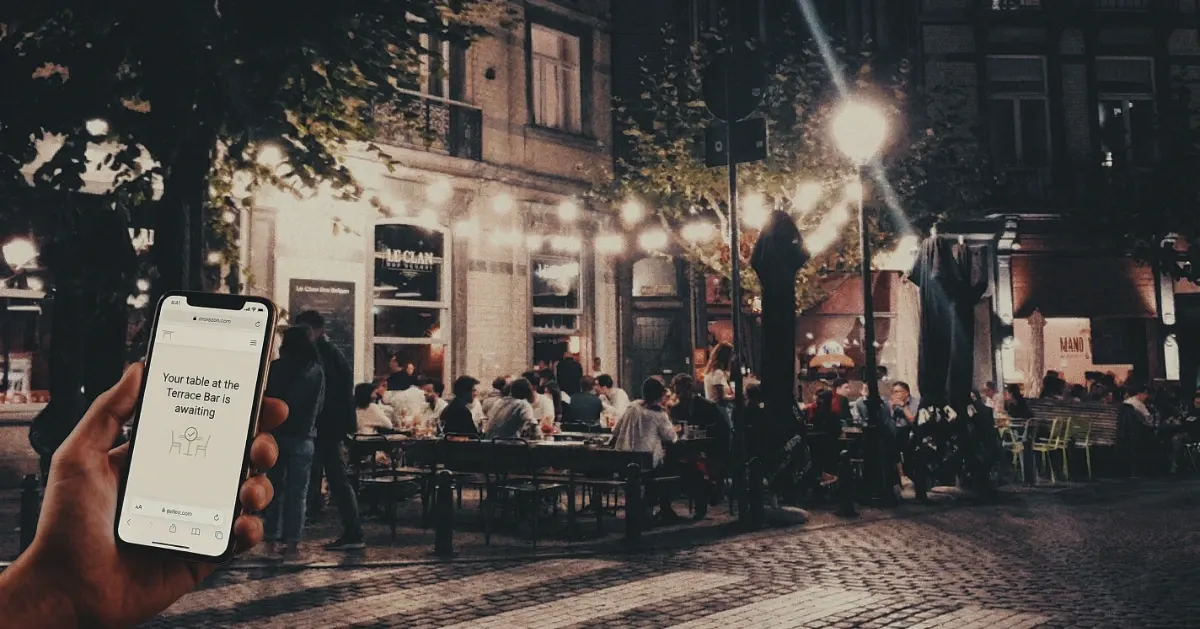
Imagine: a traveler is scrolling through Reels and sees your bar in Sololaki. Stunning lighting, a frosted glass, the perfect vibe. They are intrigued: social media has worked as the ideal “hook.”
But then, friction begins. The guest wants to know: is there a free table on the terrace? Can I bring a laptop? What is the exact menu for today? On Instagram, this data is buried in “Highlights” from two months ago or in a DM that will be answered in an hour. At this moment, the impulse cools down. The guest closes Instagram and opens Google. A minute later, they are already looking at a competitor’s website with a clear menu and a booking button.
For a bar in the center of Tbilisi, this usually means the loss of a single check: 30-50 GEL. If this situation occurs just 2-3 times a day, that is already 2,000-3,000 GEL in lost revenue per month. Over a year, this turns into 25,000-35,000 GEL of lost turnover.
The First Principle
Social media is a powerful magnet for attention, but in 2026, it remains a ‘rented storefront’. Without its own website, a business in Georgia loses the trust of 84% of guests and becomes invisible to AI assistants searching for facts, not likes.
What are the benefits of having a website for a restaurant or boutique hotel?
- Visibility in Google and AI search
- Direct bookings without commissions
- Full control over information for guests
Social media attracts attention. But it is the website that turns interest into real bookings.
Why Social Media and a Website Must Work Together
To ensure a business in Tbilisi, Batumi or any other city operates at its maximum, it is necessary to understand the division of roles between the platform and your personal digital asset:
-
Trust and the “Digital Passport”: Social media creates an emotional connection, but a website confirms legitimacy. Research shows that 84% of consumers consider a business with its own website more reliable. For a traveler paying for a hotel in advance, the website is a guarantee of security.
-
AI Agents Do Not Watch Reels: Today 24% of travelers use AI (Gemini, ChatGPT) for planning. AI cannot effectively extract data from videos or stories. It needs “clean” information: JSON-LD markup, operating hours, and current prices that can only exist on a website.
AI assistants do not read the vibe. They read the structure. When a tourist asks ChatGPT or Gemini: “best wine bar with terrace in Vera”, the AI looks for facts: address, opening hours, menu,booking options, reviews.
The AI receives this data primarily from websites where it is structured. If a bar does not have a website with structured data, trust of such systems in your business falls dramatically.
-
Commission Savings and Data Control: Sales within social networks are not the best strategy as you pay a commission to the third party (Booking.com, Wolt). Direct booking or placing an order on the website is a return of 15-30% margin, which aggregators usually take. Additionally, you increase your guests’ loyalty and the email database of your customers belongs to you, while Instagram followers remain the property of Meta.
-
Local Search (SEO): 90% of “near me” queries are processed by search engines. This is exactly why tourists find bars through queries like:
- best cocktail bar Tbilisi
- wine bar with terrace Vera
- boutique hotel Batumi center
Social media is rarely indexed for such precise local queries as effectively as an optimized web resource.
The problem is not social media per se. The problem is that most establishments lack the infrastructure that turns interest into a booking.
Check Yourself: The “Three-Click Test”
Try to walk the path of your guest when they are ready to reserve a table or book a room: Go to your business profile on social media and try to find the following in 3 clicks (without DMing):
- the current menu or room map,
- the cancellation policy,
- the booking button.
Result:
If you had to scroll through the feed or wait for an admin’s response, your conversion is “leaking.”
Social media ignited interest, but it failed to bring the guest to your door.
Loom.ge: Connecting Reach with Results
At Loom.ge, we do not offer a replacement for social media. We build the foundation upon which this traffic will land. We provide digital infrastructure for hotels, bars, and restaurants in Georgia.
Our websites solve three tasks:
- bring guests from Google and AI search;
- provide the opportunity for direct booking without OTA commissions;
- answer guest questions instantly: without DM correspondence.
As a result, your social accounts remain a source of attention, while the website turns that interest into real bookings.
Content attracts attention. Digital infrastructure turns it into bookings.
We handle the technical part of this connection. Contact us and we will perform a quick audit of your digital infrastructure and ensure that your guests are not lost at the moment of highest intent.